
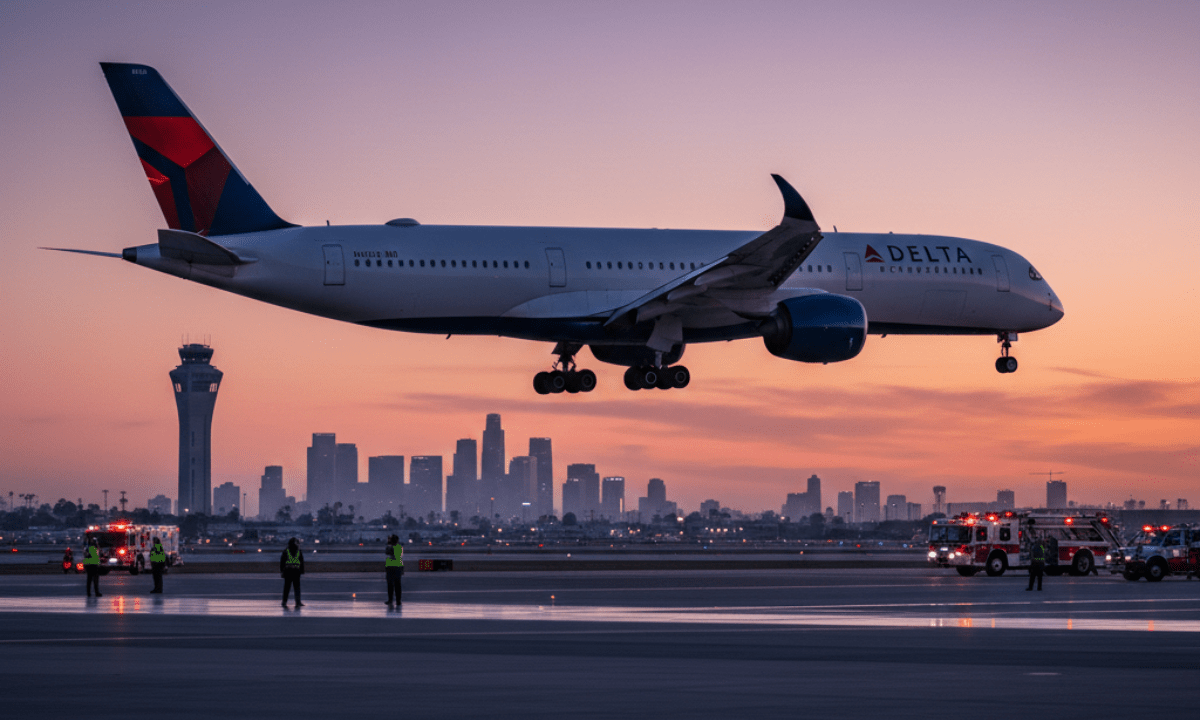
The world of commercial aviation is a wonder of precision, logistics, and technological sophistication. But even the meticulously planned lengthy-haul flights can be interrupted by means of unforeseen circumstances that prioritize the safety of all on board. Such was once the case with Delta Air traces Flight DL275, a habitual transpacific journey meant to connect Detroit Metropolitan Wayne County Airport (DTW) with Tokyo Haneda worldwide Airport (HND), which alternatively found itself on a dramatic, 12-hour detour. a. Global Airport (LAX). This incident serves as a profound reminder of the crucial significance of pilot training, on-board structures, and the widespread, complicated operational network required to manage aviation emergencies throughout continents
The Original Route and Unexpected Turn
Delta Flight DL275 is usually operated with the aid of an Airbus A350-900, one of the maximum advanced wide-body aircraft in the global, renowned for its efficiency and capability on extremely long-haul routes. The scheduled length for the adventure from Detroit to Tokyo Haneda is approximately 13 hours and 10 minutes. The flight’s route frequently takes it over the good-sized, frigid expanse of the North Pacific Ocean, a direction that demands the aircraft’s crucial anti-ice systems be in perfect working order.
On the day of the incident, the flight’s departure was already not on time by way of nearly two hours on account of the late arrival of its inbound flight. After finally getting airborne, the A350 began its lengthy trek throughout North America and out over the Pacific. It used to be all through this segment of the flight, specifically even as traversing the far-flung North Pacific, that a critical on-board gadget reportedly skilled a sizeable malfunction. More than one review, which includes speculation from aviation specialists and feedback from passengers, converged on a problem with one of the aircraft’s Rolls-Royce Trent XWB engines, especially a major issue with its engine anti-ice system.
The Critical Safety Decision
The engine anti-ice device is not a luxury; it’s miles a critical protection feature, especially whilst flying in cold temperatures at high altitudes where the hazard of ice accretion on engine inlets and additives is high. Ice accumulation can notably restrict airflow, inflicting overall performance degradation, engine surges, or even a complete engine shutdown. Protocols dictate that after a failure in a necessary device, together with anti-ice functionality, is detected, the flight crew needs to immediately initiate emergency procedures.
Given the plane’s function some distance over the sea, the flight crew confronted a strategic choice. Continuing the adventure toward Tokyo could require flying through known or forecast icing situations, barring a fully operational safety machine, a contravention of preferred operating techniques, and a great safety danger. The closest suitable airport needed to meet numerous criteria: it had to be a first-rate hub with the potential to handle a huge A350, own strong upkeep facilities to deal with the complex engine trouble, and, seriously, provide warm weather situations without precipitation or freezing temperatures that might necessitate the compromised anti-ice machine.
- L.A. Global Airport (LAX), a big Delta hub positioned a long way to the south and on the United States West Coast, emerged as the most strategically sound option, notwithstanding the full-size geographical detour. At the same time as different Delta hubs like Seattle-Tacoma worldwide Airport (SEA) were geographically in the direction of the diversion factor over the North Pacific, the winning climate situations or the particular nature of the technical fault—requiring a without a doubt “warm weather” touchdown—made LAX the more secure and extra logistically high quality preference for the airline. The diversion request was accredited, and the giant Airbus A350 turned southeast, starting what might turn out to be an all at once lengthy adventure back toward the United States mainland.
The Extended Journey and Passenger Impact
The real flight time from Detroit to l. a., following the diversion, clocked in at over 12 hours—almost the equal period as the authentic planned flight to Tokyo. Passengers, initially sure for Japan, as an alternative decided themselves land in Southern California in the nighttime. This unexpected arrival brought on a cascade of logistical demanding situations, in particular for an international flight.
Upon arrival at LAX, Delta’s floor groups immediately began the recuperation process. This covered:
- Customs and Immigration: Processing an international flight that landed at an unscheduled port of entry.
- Passenger Care and Re-routing: imparting on-the-spot help, which usually includes meal vouchers, accommodations, and—most importantly—rebooking onto onward flights to their final destination in Tokyo or other connecting towns.
- plane maintenance: Coordinating with maintenance crews and Rolls-Royce representatives to diagnose and repair the complex engine anti-ice system at the Airbus A350.
For the passengers, the diversion was a combination of initial apprehension and disappointment due to the disappointment of considerable delay. debts from travelers, shared via social media, stated the team’s calm handling of the scenario and the pilot’s explanation that the diversion to a hotter climate like Los Angeles used to be a planned, safety-first choice by virtue of the engine difficulty. Many passengers faced a prolonged stay at LAX, with some reportedly having to take a flight returned to Detroit to capture the next day’s scheduled DL275 provider to Tokyo, illustrating the substantial disruption brought on by such an occasion.
The Financial and Operational Ripples
The DL275 diversion used to be more than simply an inconvenience; it represented a giant financial and operational hit for Delta Air strains. Enterprise estimates for complex, lengthy-haul diversions can run into the millions of dollars. The charges associated with this incident are protected:
- gasoline consumption: the extra hours of flying time to LAX.
- touchdown costs: The unscheduled landing charges at a major hub like LAX.
- Protection and Inspection: The huge exertions and elements required to repair the Rolls-Royce engine anti-ice system.
- Passenger repayment: prices for rebooking, inn accommodations, and food for all affected vacationers.
- Lost sales and network Disruption: The cancellation of the Detroit-Tokyo segment, and the subsequent impact on the plane’s scheduled use for numerous days as it underwent repair, causing ripple effects throughout Delta’s Pacific community.
Beyond the instant costs, the incident highlighted the growing importance of predictive protection technology inside the aviation enterprise. The facts analysis recommended that diffused deviations in engine sensor readings, together with oil pressure, vibration levels, and the anti-ice glide charge, ought to have signaled the imminent malfunction hours before the flight’s departure, taking into consideration preventative maintenance that could have averted the entire diversion.
Conclusion: A Testament to Safety First
The diversion of Delta Flight DL275 to Los Angeles, which started out as a recurring flight to Tokyo, is a textbook example of a primary airline prioritizing protection over schedule and price. The team’s choice to pass closer airports in the choice of the maximum strategically appropriate hub for the specific mechanical trouble—a choice predicated on getting rid of the aircraft from capability icing conditions—underscores the rigorous training and safety lifestyle inside Delta and the wider aviation industry. even as disruptive and high-priced, the incident confirms that after necessary systems fail over the widespread distances of a transpacific direction, the on-the-spot goal is to securely land the plane at an airport able to resolve the difficulty and minimize the chance, even if it capability a significant, sudden detour for loads of passengers.