
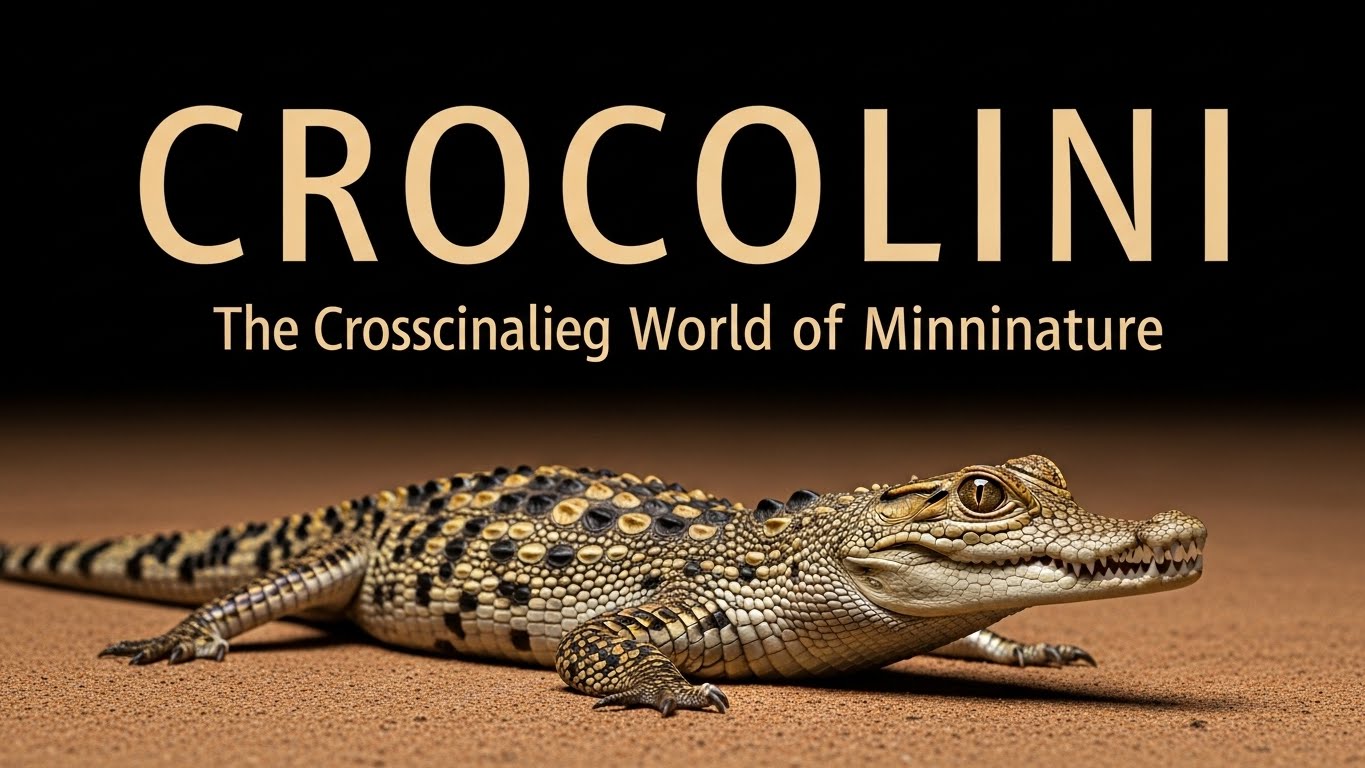
The term “Crocolini” is a captivating example of a keyword that has taken on multiple, divergent meanings throughout diverse modern-day cultural and medical landscapes. a long way from denoting a novel entity, the keyword has emerged concurrently in three awesome and exceedingly attractive fields: as a modern hybrid vegetable inside the culinary international, as a designation for a unique puppy reptile within the unusual animal change, and as an element inside the discussion of lesser-regarded natural world conservation. This tripartite identification makes “Crocolini” a compelling challenge for an in-depth exploration of innovation, ecology, and contemporary branding.
The Culinary Crocolini: A Hybrid Vegetable Sensation
Inside the international of gastronomy, “Crocolini” has been embraced as a state-of-the-art, vibrant, and versatile vegetable, frequently referenced synonymously or in near relation to the commercially branded “Broccolini,” “Tenderstem broccoli,” or “Aspabroc.” while the registered trademark Broccolini is a particular hybrid of traditional broccoli (Brassica oleracea var. italica) and gai lan (or chinese kale, Brassica oleracea var. alboglabra), the name “Crocolini” has come to be an casual, trap-all term for this new generation of vegetable that guarantees a milder, sweeter flavor profile and a extra gentle, totally safe to eat stalk.
Origins and Appeal
The authentic hybrid was once developed in Japan in the 1990s, aiming to create a vegetable with the nutritional benefits of broccoli but with superior warmth tolerance and a greater palatable flavor. The fulfillment of this pass lies in its culinary versatility. Unlike conventional broccoli, which requires trimming the thick, woody stalk, the delicate stems of Crocolini are tender adequate to be sautéed, steamed, or roasted whole, main to “no-waste” cooking that appeals to sustainable cooking traits.
The dietary punch is another key to its recognition, particularly inside the developing vegan and health-aware food movements. It’s miles rich in nutrients A, C, and ok, as well as antioxidants like sulforaphane. Its low-calorie, excessive-fiber composition makes it an ideal component. chefs and home cooks admire its barely peppery, nutty flavor, which pairs excellently with citrus, garlic, olive oil, and Asian-inspired sauces, cementing its place no longer as a fad, but as a staple in contemporary, healthful, and inventive delicacies.
The Zoological Crocolini: Miniature Reptile Companion
Transferring entirely far from the kitchen, “Crocolini” is also a time period used in the special pet exchange, referring to a fascinating, yet ethically complicated, notion: a miniature, domesticated crocodilian-like reptile.
A Quest for the fascinating companion
The zoological Crocolini is rumored to be the result of planned captive breeding efforts, mainly within the late 20th century, seeking to create a potential pet that retained the striking, fascinating appearance of a crocodile but possessed a smaller stature and a less aggressive, greater adaptable temperament. These efforts frequently involve crossing smaller species of crocodilians, specializing in trends that foster a bond with human caregivers.
Those creatures, regularly measuring “just a few feet long,” are defined as clever and curious, displaying a playful demeanor unusual in large, wild crocodilians. Their compact bodies, embellished with various hanging scales, make them visually appealing to seasoned reptile enthusiasts looking for something tremendous.
Ethical and Care Considerations
However, the pursuit of the zoological Crocolini highlights the inherent obligations and ethical debates surrounding extraordinary pet ownership. Regardless of their smaller size and purported docility, those are nonetheless complex reptiles requiring specialized care. They need spacious habitats that intently mimic their natural wetlands, unique temperature and humidity controls, and a cautiously balanced eating regimen that extends past just meat to encompass end result and veggies, contradicting common myths approximately crocodilian diets.
Furthermore, the communication about “Crocolini” in this context regularly intersects with conservation. Even as the puppy change specializes in captive-bred animals, the demand can inadvertently fuel a hobby in and potentially damage wild populations of smaller crocodilian species, making responsible sourcing and complete education on their unique desires paramount.
The Ecological Crocolini: A Symbol of Conservation Challenge
In the end, “Crocolini” appears as a label for a lesser-acknowledged species in ecological and conservation discussions, distinct from the puppy change’s hybrid. in this context, the Crocolini represents the several elusive reptiles and amphibians frequently ignored by way of principal conservation campaigns.
The Role of the Unnoticed Species
These creatures, described as “elusive reptiles,” nestled inside the planet’s wetlands and mangroves, play an essential, yet frequently unappreciated, position in keeping the balance of their ecosystems. They act as key predators or regulators, and their decline signals deeper troubles within their habitats.
The threats they face are regularly occurring in the susceptible natural world:
- Habitat Destruction: The draining of wetlands for city and agricultural expansion.
- pollution: Contaminants in waterways affect breeding and food resources.
- Climate change: rising temperatures and shifting water ranges are impacting their sensitive breeding cycles.
Conservationists and scientists are running to deal with these problems through focused habitat restoration, organising covered areas, and conducting integral research into their precise behavior and breeding styles. The use of “Crocolini” right here serves as a strong reminder that biodiversity isn’t always completely dependent on the high-profile megafauna; the upkeep of smaller, lesser-known species is similarly critical for ecological health.
The Synthesis of a Keyword
The multifaceted nature of “Crocolini” reveals the complex approaches wherein language evolves in response to human innovation and hobby. From the managed, excessive-tech hybridization of vegetables to the touchy ethics of exceptional puppy preserving and the vital urgency of ecological upkeep, “Crocolini” stands as a keyword bridging those numerous present-day spheres. Whether or not you encounter it on a restaurant menu, in a puppy store, or in a systematic journal, “Crocolini” signifies a factor of intersection among human interest and the natural global.