
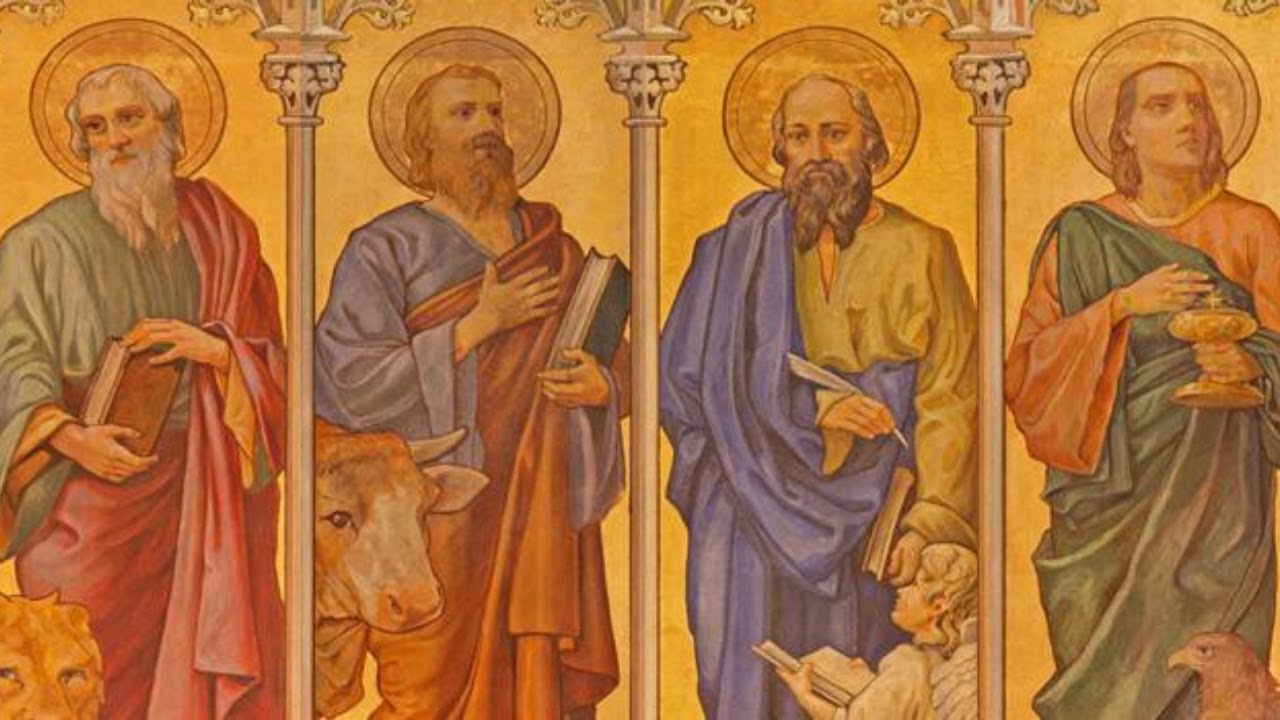
They are theological narratives that recount the existence, ministry, passion, death, and resurrection of Jesus Christ, offering the framework for Christian trust, doctrine, and exercise. The 4 canonical Gospels—Matthew, Mark, Luke, and John—shape the gateway to the New Testament and have profoundly fashioned Western civilisation, ethics, and art.
I. Defining the Literary Genre and Purpose
The Gospels, composed in the first century AD, no longer strictly adhere to fashionable biographical standards. They’re great understood as a structure of Greco-Roman biography, frequently termed bios. But, not like regular historical biographies that aim for chronological completeness, the evangelists (Gospel writers) employed a selective and thematic technique.
The primary motive of the Gospels is twofold:
- Evangelistic: To proclaim the “good news” that Jesus is the Christ (Messiah), the Son of God, and that through trust in him, readers can get hold of eternal life.
- Didactic: To provide education for believers regarding Jesus’ teachings, his instance of discipleship, and the nature of the dominion of God.
Scholarly consensus views these texts as literature rooted in oral traditions, early Christian preaching (the kerygma), and a deep engagement with the Jewish Scriptures (the Old Testament). The versions in detail the various four bills aren’t seen as flaws, however, rather as wonderful theological and literary views designed to deal with the wishes and backgrounds of various early Christian groups.
II. The Synoptic Gospels: Matthew, Mark, and Luke
Matthew, Mark, and Luke are together referred to as the Synoptic Gospels (from the Greek phrase synopsis, which means “seeing collectively”) because they share a large quantity of material, frequently within the same order. This excessive degree of parallelism indicates a literary interdependence that is explored through the Synoptic problem.
A. The priority of Mark
Most biblical scholars adhere to the Markan priority speculation, suggesting that Mark used to be the first Gospel written, possibly around AD 65–70, and that Matthew and Luke used it as a primary source.
- Mark: frequently described as the shortest and maximum action-packed Gospel, Mark presents Jesus as the powerful yet suffering Son of God. Its fashion is instant and frequently raw, focusing heavily on Jesus’ deeds (miracles) and concluding with a stark, fairly ambiguous ending, which has been challenged to excessive debate.
B. Matthew and Luke: Expanding the Narrative
The not-unusual cloth shared via Matthew and Luke, but absent in Mark, is historically attributed to a hypothetical supply referred to as “Q” (from the German Quelle, which means “source”), presumed to be a group of Jesus’ sayings.
- Matthew: Written by and large for a Jewish-Christian target audience (c. ad 80–90), Matthew’s ambition is to demonstrate that Jesus is the Messiah promised in the Old Testament. It famously includes the Sermon at the Mount and functions as the system citation, often mentioning that activities occurred “to meet what was once spoken with the aid of the prophet.” Matthew portrays Jesus as the brand new Moses and the rightful King.
- Luke: Composed by way of a Gentile Christian writer (c. advert eighty–90), who used to be additionally the author of the book of Acts, Luke is incredible for its polished Greek and its customary scope. It emphasises Jesus’ concern for the marginalised—the poor, ladies, and Samaritans. Luke’s Gospel starts with a meticulous preface, stressing its basis on eyewitness accounts, and affords the most specific narratives surrounding the start of Jesus.
III. The Distinct Voice: The Gospel of John
The fourth Gospel, attributed to the Apostle John, stands apart from the Synoptics. Composed later (c. 90–one hundred), it has a unique form, vocabulary, and theological awareness.
- Its beginning chapter proclaims Jesus to be the emblems (“word”) who was once with God and was once God, emphasising his divine pre-life. In place of the fast parables observed within the Synoptics, John functions with prolonged discourses and dialogues, such as the communication with Nicodemus about being “born again” and the “I am” statements (“I am the bread of existence,” “I’m the good shepherd”). John’s central theme is the identification of Jesus as the Son of God and the supply of everlasting existence, frequently focusing on the significance of seven key “symptoms” (miracles) carried out by Jesus.
IV. Enduring Influence and Global Significance
The impact of the four Gospels transcends spiritual barriers. Their narratives have served as the foundational source material for:
- Theology and Ethics: They articulate the Christian doctrines of the Incarnation, the Atonement, and the Resurrection, and they establish the moral framework referred to as the Golden Rule and the ethic of self-sacrificial love.
- Regulation and Governance: principles of human dignity and justice found in the Gospels have subtly motivated the development of Western felony and political structures.
- artwork and subculture: From Michelangelo’s frescoes to Bach’s St Matthew Passion, and from medieval stained glass to trendy literature, the tales, characters, and teachings of the Gospels were continuously reinterpreted and represented, serving as one of the single finest inspirations for human innovative endeavour.
In precis, the 4 canonical Gospels—Matthew, Mark, Luke, and John—are vital documents. They are the number one historical and theological information about Jesus Christ, but they are characterised as more than simply ancient debts. They’re a coherent proclamation of good news, inviting readers throughout every age and culture to come upon the discernment they portray and to embody the transformative message that has echoed for the duration of history for two millennia.