
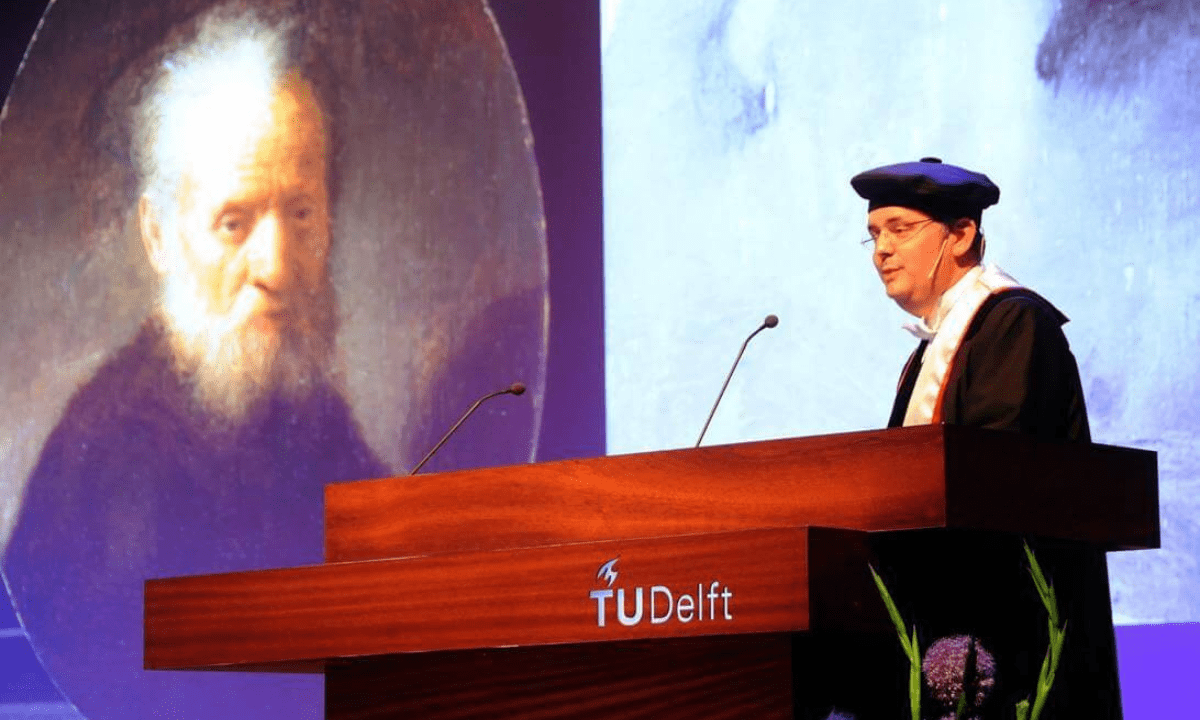
The call Jeroen Dik often serves as a virtual bridge to the renowned Dutch pupil Dr. Joris Dik, whose paintings stand at the forefront of a modern subject: the application of contemporary fabric technology to classical archaeology and art history. Dr. Joris Dik isn’t simply an academic; he’s a pioneer whose profession has been dedicated to the usage of physics and chemistry to disclose the secrets and techniques hidden inside some of the arena’s maximum beloved and historical masterpieces.
His twin history—protecting superior levels in each art history and chemistry—has supplied him with a completely unique vantage point, permitting him to mix the humanistic inquiry of artwork with the rigorous analytical tools of technological know-how. His contributions have basically modified the way conservators, curators, and historians approach the look at of artwork, sculptures, and archaeological artifacts, effectively making him the “archaeologist of the paint layer.”
I. From Antiquity to Atoms: The Education of a Pioneer
Born in Amsterdam in 1974, Joris Dik’s educational trajectory reveals the interdisciplinary route that might outline his career. He started with pursuing art history and Classical Archaeology at the University of Amsterdam, receiving his M.A. in 1997. This early basis steeped him within the narratives, historic contexts, and stylistic conventions of historical and classical artwork, teaching him what questions to ask about a work’s foundation and creation.
However, his curiosity prolonged past floor aesthetics and historic documentation. pushed via a desire to recognize the material fact of those masterpieces, he pursued a second, extra technical course, graduating with a Ph.D. in Chemistry in early 2003. This technical expertise geared him up with the know-how of ways substances degrade, react, and—most significantly—how they can be non-destructively analyzed the usage of advanced scientific instrumentation.
This uncommon combination—the cultural literacy of the humanities merged with the analytical rigor of the difficult sciences—located him perfectly to release a brand new discipline of inquiry.
II. The Unseen Masterpieces: Revealing the Pentimenti
Dr. Dik’s most celebrated paintings revolve around the non-unfavourable evaluation of artwork, in particular the ones of the Dutch Masters. using noticeably advanced technology, he and his teams can peer underneath the seen paint layers to express a work’s history, creation process, and even forgotten images.
X-ray Fluorescence (XRF) and Synchrotron generation
His studies heavily utilize techniques like X-ray Fluorescence (XRF) analysis. XRF lets scientists determine the chemical composition of paint pigments besides taking a bodily pattern. by means of mapping the presence of particular factors—consisting of copper (utilized in green pigments) or lead (utilized in white pigments)—Dr. Dik can digitally reconstruct layers that have been painted over.
Possibly his maximum widespread contribution is the development and deployment of the superior synchrotron era for artwork evaluation. In collaboration with partners like Bruker AXS, Dr. Dik has spearheaded the introduction of portable or portable-based synchrotron-based instruments. A synchrotron hurries up atomic debris to near the velocity of light, producing extraordinarily bright X-rays that may penetrate and examine materials with unprecedented detail.
This functionality allows researchers to uncover pentimenti—the adjustments and changes made by the artist throughout the painting procedure. as an example, he has revealed the unique positioning of figures, initial compositional sketches, and the artist’s 2d thoughts on a piece, providing profound insights into the innovative evolution of artists like Rembrandt or Vermeer. This artwork records beyond mere connoisseurship and into the area of verifiable medical fact.
III. Archaeological Applications and Material Science
Dr. Dik’s work extends beyond paintings to the analysis of archaeological artifacts, in which his substance technological expertise is similarly vital. In archaeology, the capability to analyze the composition of ceramics, metals, and glass found at excavation sites can monitor alternate routes, production techniques, and the technological sophistication of historical cultures.
For instance, the perception of the particular alloy utilized in a Bronze Age device or the chemical signature of glazes on Roman pottery affords verifiable evidence of financial and cultural trade throughout significant distances. His research allows answer questions like:
- Provenance: in Where did the raw substances come from?
- era: What temperatures and strategies had been used in its advent?
- Deterioration: How can we first-rate preserve this artifact for the subsequent century?
This work in conservation technological know-how is crucial, as it provides cultural background institutions with the facts needed to make knowledgeable decisions approximately storage, restoration, and display, ensuring the preservation of global history.
IV. The Impact: Changing the Narrative of Art History
Dr. Joris Dik’s approach is profound due to the fact that he has moved the have a look at of art and archaeology from a normally subjective and descriptive area to an absolutely objective and empirical one.
His breakthroughs have brought about:
- Attribution challenges: clinical analysis has every now and then shown or refuted traditional attributions of famous works, settling debates that have lasted for centuries.
- New Discoveries: His techniques have exposed completely “misplaced” images beneath current paintings, successfully adding formerly unknown works to the art historical canon.
- Interdisciplinary training: His career evokes a brand new era of scholars to pursue combined degrees, noting that the largest final questions in cultural history require each medical and humanistic expertise.
Dr. Dik’s fulfillment, highlighted by way of essential offers from agencies like the Netherlands Organization for Scientific Research (NWO), is a testimony to the identified value of his specific method. He isn’t always simply reading art; he is redefining the gear and strategies by which we apprehend our entire cloth past.