
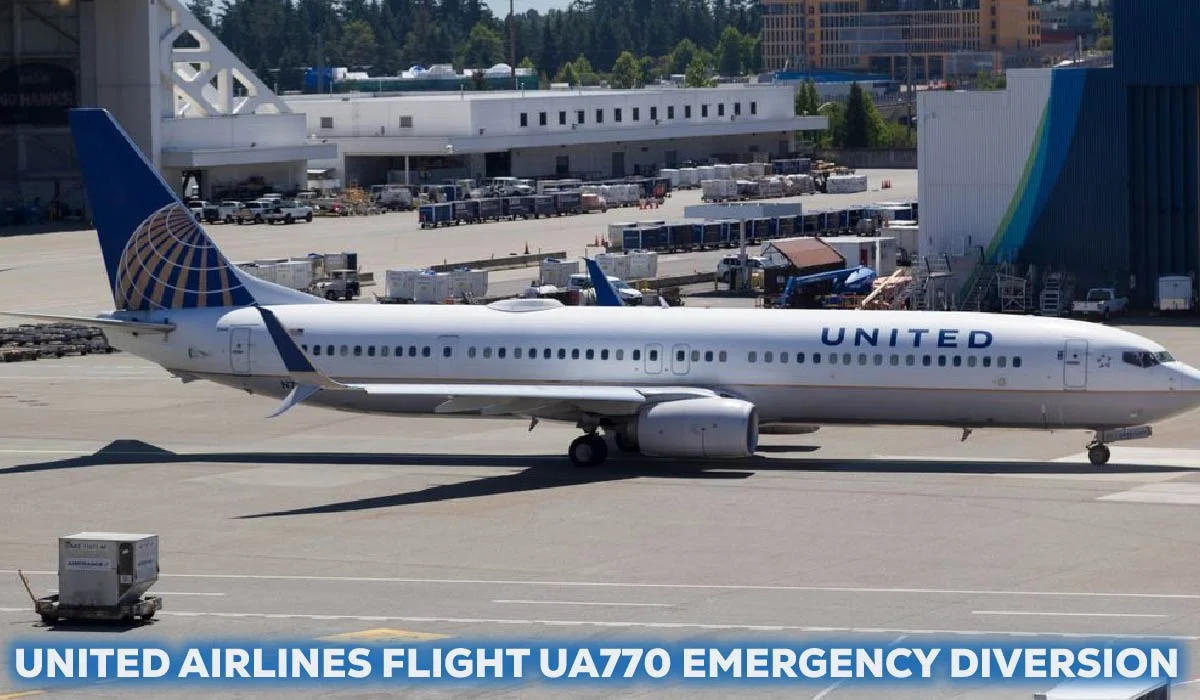
In a startling mid-air turn of activities, United airlines Flight UA507, a protracted-haul journey from San Francisco worldwide Airport (SFO) to Rome’s Leonardo da Vinci Fiumicino Airport (FCO), was pressured to declare a full-scale emergency and make an unplanned diversion to Reykjavíok, Iceland, sending shockwaves thru the worldwide travel network and raising renewed questions about transatlantic flight protection and the preservation of ageing plane fleets. The incident, which spread out hastily over the far-flung expanse of the North Atlantic, solid a cloud of uncertainty over the more than 275 passengers and 14 group participants aboard the widebody jet.
The Distress Call Over the Ocean
The Boeing 777-200ER, tail number N76010, which first commenced service in 1999 and is a key element of United’s legacy fleet, departed San Francisco at five:03 p.m. local time on a Saturday evening in June 2025. It was once expected to be a routine, approximately eleven-hour and forty-five-minute flight to the Eternal City. But, roughly eight hours into the adventure, at the same time as cruising high above the mid-Atlantic hall, flight operations took a sudden, urgent turn.
With little caution, the group initiated emergency protocols. They contacted air site visitors control and signaled a general emergency by putting the plane’s transponder to Squawk 7700—the internationally recognized code for distress. Flight tracking facts indicated a fast descent to an altitude of about 21,000 feet (6,300 meters). This unique altitude alternate, carried out in line with professional technique and common sense, counseled that the team was following a “drift-down” procedure, probably necessitated by the inability to safely maintain cruising altitude owing to a technical difficulty, along with a partial engine failure or a pressurization issue. One passenger account later shared on social media, quoting the pilot, indicated the center problem used to be a gas leak, which might have genuinely necessitated the instant shutdown of the affected engine and a descent to a lower, more secure altitude for single-engine operation.
The nearest suitable airport for an unscheduled landing was Reykjavíok’s Keflavíok global Airport (KEF). The flight was once straight away rerouted, and within minutes of the alert, the team expertly maneuvered the 26-year-old plane in the direction of the Icelandic coast.
A Safe Landing in the Land of Fire and Ice
The dramatic mid-flight emergency concluded with a textbook touchdown at Keflavík. At about eight:01 a.m. UTC on Sunday morning, the aircraft touched down effectively on the runway. Emergency motors have already been mobilized and are waiting at the tarmac, a preferred method for any declared emergency touchdown, reinforcing the gravity of the scenario that had simply come about.
Once landed, the Boeing 777 used to be towed to a remote stand, where mechanics started a radical inspection. Crucially, all 275 passengers and 14 crew members were said to be secure and unhurt. The successful dealing with of the emergency through the flight deck team, who needed to control a necessary state of affairs over an oceanic path with restricted diversion preferences, was once a testament to their rigorous training and professionalism. The calm demeanor of the crew, as attested by passengers, played a crucial role in keeping order and lowering anxiety within the cabin.
Unraveling the ‘Mechanical Issue’ and Passenger Impact
Even as the instant risk had passed, the diversion created a logistical nightmare for United Airlines and a full-scale disruption for hundreds of vacationers. United officially released a statement confirming that the flight “landed accurately at Keflavik Airport on Sunday to address a mechanical difficulty,” and that a brand new flight was once scheduled for tomorrow to take customers to Rome, with the airline providing hotel accommodations.
However, the dearth of instantaneous, precise detail about the character of the “mechanical problem” solely fueled public hypothesis, with the passenger-mentioned gas leak being the most credible non-authentic account.
The human value of the delay was once on the spot and palpable. vacationers, many on excursion or with quintessential connection factors, faced a minimum 24-hour delay. For the ones en route to weddings, business conferences, or once-in-a-lifetime tours, the surprising delay in Iceland was once a prime setback. At the same time as United’s fast provision of motels and rebooked flights was commendable, the ripple effect on the airline’s community was inevitable, potentially affecting aircraft rotation and scheduling for their transatlantic fleet for days to return, as United labored to reposition the stranded plane and its crews.
This incident also reignited public debate regarding the age of the aircraft involved. The 26-year-old Boeing 777-200ER, though meticulously maintained and licensed as airworthy, is part of a generation of widebody jets nearing the quit of their operational lifespan with a few important companies. This particular event joins a growing list of mechanical problems and diversions, from time to time at the very same SFO-to-Rome direction, prompting accelerated scrutiny from aviation safety regulators on fleet readiness, specifically for long-haul oceanic segments where climate and time are quintessential factors in any emergency.
The Long-Term View of Aviation Safety
Ultimately, the emergency landing of UA507 in Reykjavík is a powerful, actual international instance of the aviation industry’s safety protocols operating as designed. Whilst an irrecoverable difficulty arises—be it a mechanical fault, a scientific emergency, or another threat—the gadget prioritizes passenger protection chiefly else. The decision to squawk 7700 and divert immediately to the closest successful airport, even when some distance from the unique destination, is the very definition of danger mitigation in cutting-edge air travel.
As passengers have been finally rebooked and continued their trips to Rome, the focus remained on the research into the mechanical trouble itself. The final file at the motive of the diversion will function as a valuable information factor for United Airlines and regulatory bodies, influencing destination protection schedules and operational strategies. Inside the quite complex international world of intercontinental flight, the UA507 incident stands as a stark reminder of the demanding situations inherent in transporting loads of people across the globe, and the absolute necessity of the stringent safety culture that allows such dramatic emergencies to be handled effectively on the ground. The passengers may additionally have neglected an afternoon in their Roman holiday, but they had been given a useful lesson in the resilience and professionalism of present-day air journey crews.