
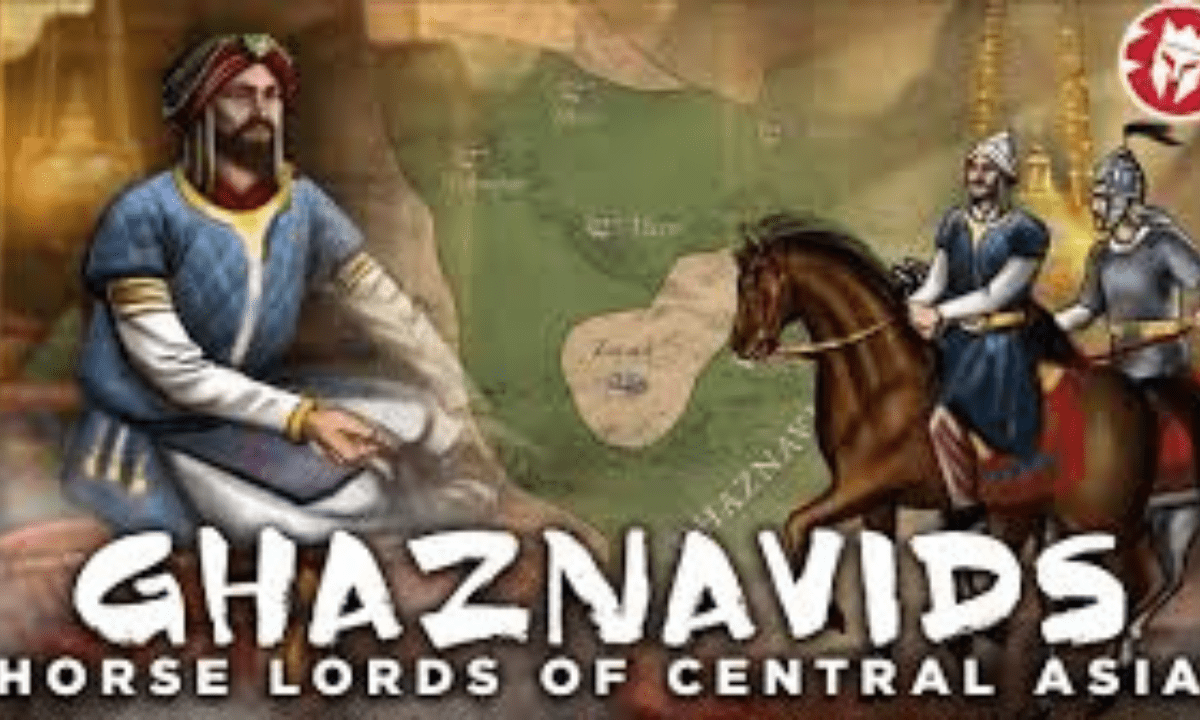
Sebüktegin, officially acknowledged through his laqab (agnomen) Abu Mansur Nasir ad-Din wa’d-Dawla Sabuktigin, stands as a foundational parent in the records of the Islamic East, in particular because the founding father of the formidable Ghaznavid dynasty. Born around the 940s inside the region of Barskhan, near the Issyk-Kol Lake (in contemporary-day Kyrgyzstan), his origins were humble. Sebüktegin used to be a Turkic ghulam (navy slave), a commonplace trajectory for formidable and successful guys inside the army systems of the Samanid and Abbasid empires. His lifestyle is a testament to the societal mobility possible within those complex political structures, in which military talent may want to lead a slave to turn out to be an unbiased sovereign.
The call Sebüktegin itself is of Turkic beginning, potentially that means “liked prince.” However, by means of his era, the time period tegin had developed to turn out to be synonymous with the high-ranking Turkish slave commanders serving the Abbasid Caliphate and its successor states. His later laqab, Nasir al-Din wa’d-Dawla (Protector of the trust and country), reflects his closing achievements and his position as a champion of Sunni Islam.
The Rise to Power under Alp-Tegin
Sebüktegin’s professional course began under the patronage of Alp-Tegin, an outstanding Turkic commander who served as the top of the Samanid royal defense. This period was crucial for Sebüktegin’s improvement, as he rose hastily via the military ranks, reportedly commanding 2 hundred ghulams by the age of eighteen.
The political panorama of the mid-tenth century used to be volatile. In 962, Alp-Tegin fell out of style with the Samanid court in Bukhara. He eventually led his unswerving Turkish retainers—consisting of Sebüktegin—southwards, in the end conquering the city of Ghazna (in eastern Afghanistan) from its neighborhood ruler, Abu Bakr Lawik. Alp-Tegin installed a semi-independent principality in Ghazna, acknowledging the nominal authority of the Samanids.
Following Alp-Tegin’s death in 963, a succession of short-reigning Turkish commanders ruled Ghazna. Sebüktegin continued to serve underneath those rulers, keeping his position and impact. In 977, after the death of the ruler Böritigin, Sebüktegin was chosen by the Turkish troops in Ghazna as their new leader. This occasion marked the proper beginning of the Ghaznavid dynasty, even though Sebüktegin might rule for the next twenty years with the formal identify of governor under the Samanid Amir. The inscription on his tomb could later style him al-Hajib al-Ajall (most Exalted Commander), an identity signifying his subordinate—but truly self-sufficient—repute within the extra Samanid realm.
Expansion and Consolidation of the Realm
From his energy base in Ghazna, Sebüktegin right now commenced a strategic campaign of enlargement, a policy that would symbolize the complete Ghaznavid technology.
- Southern and Western Conquests: rapidly after taking strength (c. 977–978), he prolonged his authority southeastward down the Helmand valley, conquering the districts of Roḵḵaj and Bost, and subsequently incorporating Qoṣdār in northern Balochistan. These campaigns subdued rival Turkish factions and secured essential trade routes, and gained access to the sea.
- The Indian Frontier and the Hindu Shahi Dynasty: The most massive route of Sebüktegin’s expansion used to be eastward, into the areas bordering India. He clashed again and again with the Hindu Shahi dynasty of Wayhind (Ohind), led by way of Raja Jaypāl. Marching down the Kabul River valley, Sebüktegin defeated Jaypāl twice, in about 986–987, seizing territory up to Peshawar and increasing Islamic influence in these frontier regions. Those conflicts served 2 functions: securing the Japanese flank of his burgeoning state and establishing the course for the massive and famous incursions into the Indian subcontinent that his son, Mahmud, would later adopt.
Sebüktegin’s administration additionally noticed positive reforms, substantially concerning the iqta (land supply) machine, which he helped regularize as a source of income for his army rather than depending completely on plunder, a vital for organizing a solid nation. He additionally hired Persian secretaries and officials, demonstrating a strategic integration of neighborhood Iranian administrative know-how into his Turkic-led regime.
A Pragmatic Relationship with the Samanids
At some stage in his twenty-12 months reign, Sebüktegin maintained a pragmatic political relationship with the Samanid dynasty. Nominally, he recounted their sovereignty, placing the names of the Samanid amirs before his very own on his coinage and the usage of a name (al-Hajib al-Ajall) that denoted a subordinate function.
But this submission used to be largely nominal. The Samanids, increasingly weakened by means of inner strife and rebellious governors, had little actual control over Ghazna. In 994–995, the Samanid Amir Nuh II b. Mansur was desperate enough to request army useful resources from Sebüktegin in opposition to two powerful riot generals, Fāʾeq Ḵāṣṣa and Abu ʿAli Simjuri, who had seized Khorasan.
Sebüktegin, accompanied by way of his eldest son Mahmud, intervened decisively. They successfully combated the rebels, an act which both saved the Samanid dynasty and allowed Sebüktegin to solidify his circle of relatives’ power. As a reward, Mahmud was once appointed commander-in-chief of the Samanid navy of Khorasan. This joint campaign efficaciously grew to become the Ghaznavids from a far, quasi-impartial governorship into the single most essential army force propping up the fragile Samanid empire, giving Sebüktegin sizeable leverage.
Legacy and Succession
Sebüktegin died in August/September 997 at the village of Madr-e Muy, north of the Hindu Kush, while returning from his campaigns.
His most enduring legacy is the muse of the Ghaznavid country, which under his son, Mahmud of Ghazni, could grow into an empire stretching from Persia to the Punjab. However, before that amazing enlargement could arise, Sebüktegin’s death brought about a quick but intense succession struggle. For motives that remain debated (some historians propose it was on account of Ismail’s mother being the daughter of Alp-Tegin, Sebüktegin’s original master), Sebüktegin distinctive his more youthful son, Ismail, as his heir in Ghazna.
Mahmud, who was once arguably greater skilled and had already established his army and administrative prowess in Khorasan, rejected this association. After defeating his brother Ismail in a civil struggle, Mahmud secured the throne in 998. He speedily discarded the pretense of Samanid vassalage and, upon receiving recognition from the Abbasid Caliph, became the primary, completely impartial monarch of the Ghaznavid dynasty, all the time linking his father’s foundational paintings with his very own imperial repute.
Sebüktegin is remembered in the historic way of life now not solely as a successful conqueror but also as the amir-e ʿādel (simply amir), a recognition emphasised by using anecdotes regarding his equity preserved in later ancient works. His life tale is a traditional instance of a “slave-king” who founded one of the largest dynasties in medieval Islamic history, efficaciously navigating the complex politics of the Samanid and Abbasid worlds to carve out an enormous principality that became the springboard for an empire.